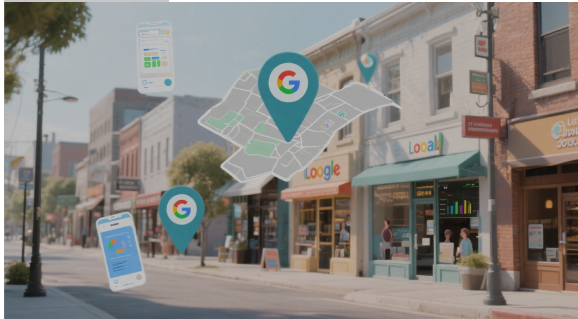
Nearly half of every query typed into Google carries local intent. According to data published by GoGulf and corroborated by Sagapixel research, 46% of all Google searches are looking for local information — a nearby restaurant, a plumber open right now, a dentist accepting new patients. That single statistic should reshape how small and mid-size businesses allocate their time and budget. For anyone seeking the SEO strategy, the message is clear: if you are not optimizing for local search, you are invisible to almost half of your potential customers. And the fastest, free way to fix that is Google Business Profile (GBP).
GBP Optimization Essentials: Categories, Attributes, and Photos
Google Business Profile is not just a listing — it is a micro-website that Google trusts implicitly because it owns the platform. When you set up or refine your GBP, three elements matter more than anything else: your category selection, your attributes, and your photos.
Categories tell Google what your business does. You get one primary category and up to nine secondary ones. Choose poorly and you will not show up for the searches that matter. A family law attorney who selects “Legal Services” as the primary category instead of “Family Law Attorney” loses specificity — and specificity is what wins in local search. Research by Sterling Sky found that changing a primary category alone moved businesses from page two into the local 3-pack within weeks.
Attributes are the granular details: wheelchair accessibility, outdoor seating, free Wi-Fi, women-owned. Google uses these to match user queries with filters. Since 2024, Google has expanded attribute options significantly, adding tags for service-area businesses and appointment-based models. Fill in every attribute that applies.
Photos might be the most underutilized marketing strategies lever in GBP. BrightLocal’s annual survey shows that businesses with more than 100 photos get 520% more calls than average, and 2,717% more direction requests. That is not a typo. Upload interior shots, exterior shots, team photos, product images, and before-and-after work. Google rewards visual completeness.
How the Local Pack Algorithm Actually Works
Google has publicly stated that three factors determine local pack rankings: relevance, distance, and prominence. Understanding how these interact is essential to any serious local marketing strategies effort.
Relevance is how well your profile matches what someone searched for. It pulls from your categories, business description, services listed, and even the content of your reviews. If customers repeatedly mention “emergency plumbing” in reviews and you serve that niche, Google connects the dots.
Distance is straightforward — how far is the business from the searcher or the location specified in the query? You cannot fake proximity, but you can expand your reach by maintaining service-area designations and building city-specific landing pages on your website.
Prominence is Google’s measure of how well-known your business is. It factors in backlink profiles, citation volume, review count and velocity, and overall web presence. A bakery with 800 Google reviews and press mentions in the local newspaper will outrank a competitor with 12 reviews and no web footprint, even if the competitor is two blocks closer to the searcher.
Review Management: The Engine Behind Local Prominence
Reviews are the single strongest signal within the prominence factor. A 2024 Whitespark study ranked review signals — quantity, velocity, diversity, and keywords within review text — as the number-one influence on local pack rankings.
But gathering reviews requires a system, not occasional reminders. The most effective approach: send a short SMS or email with a direct link to your Google review form within two hours of a completed service. Timing matters. Research from Podium shows that review requests sent within the first hour of service have a 5x higher completion rate than those sent 24 hours later.
Responding to reviews — both positive and negative — signals engagement to Google. A thoughtful reply to a negative review can actually increase trust with potential customers reading those reviews later. Data from Harvard Business Review indicates that businesses that respond to reviews see a measurable increase in subsequent review volume, creating a positive feedback loop.
Consider the example of a Portland-based HVAC company that implemented a post-service automated review request flow. Over six months, their review count went from 47 to 310, their average rating climbed from 4.1 to 4.6, and their local pack appearances tripled. No ad spend required.
Local Content and Landing Pages That Actually Rank
Your GBP does not exist in isolation. Google cross-references your profile with your website. That means local landing pages — pages targeting “[service] in [city]” — directly support your GBP performance.
But these pages need substance. A thin page with just a headline, a stock photo, and a phone number will not compete. Build local landing pages that include neighborhood-specific details, testimonials from clients in that area, embedded Google Maps, and references to local landmarks or events. A roofing company in Denver created separate pages for each of the 78 neighborhoods it served. Within four months, organic traffic from those neighborhoods increased 340%.
Blog content also feeds local SEO. Write about local events you sponsor, community projects you participate in, or seasonal issues relevant to your trade. A pest control company publishing a “Spring Termite Season Guide for Dallas Homeowners” captures search volume that generic national content never will.
Citation Consistency: The Boring Work That Pays Off
Your Name, Address, and Phone number (NAP) must be identical across every directory, social profile, and data aggregator that lists your business. A mismatch — even something as minor as “Suite 200” versus “Ste. 200” — creates confusion for Google’s algorithms and can suppress your local rankings.
Use a citation audit tool like BrightLocal, Moz Local, or Yext to scan for inconsistencies. Fix the major data aggregators first — Foursquare (which feeds Apple Maps), Data Axle, and Localeze. These cascade corrections to hundreds of smaller directories. Budget an afternoon for this once a quarter.
New GBP Features You Should Be Using Right Now
Google has aggressively expanded GBP over the past 18 months. Several features remain underused by most businesses, which means adopting them gives you an immediate edge.
Messaging lets customers text you directly from your GBP listing. Google tracks your response time and displays it publicly — fast responders earn a badge. Products allow you to showcase inventory with photos, prices, and descriptions directly in search results. The Q&A section is often hijacked by competitors or confused users; monitor it weekly and seed it with your own frequently asked questions and answers. Booking integration, available through partners like Reserve with Google, lets customers schedule appointments without leaving the search results page. Each of these features increases the surface area of your listing and gives Google more data to match you with relevant queries.
AI Overviews and What They Mean for Local Businesses
Google’s AI Overviews — the generative AI summaries now appearing atop many search results — have rattled the SEO world. But for local businesses, the impact is more nuanced than the panic suggests.
AI Overviews tend to appear for informational queries (“how to fix a leaky faucet”) far more than transactional local queries (“plumber near me”). The local 3-pack still appears prominently for location-based searches, and Google has shown no signs of replacing it with AI-generated summaries. In fact, Google has begun integrating GBP data into AI Overviews, pulling business hours, review snippets, and service details into the generated text. Businesses with rich, complete GBP profiles are more likely to be cited in these AI-generated answers.
The practical takeaway: AI Overviews make GBP optimization more important, not less. Your profile data now feeds two systems — traditional local pack rankings and the AI summary engine. Keeping that data accurate and thorough is one of the smartest marketing strategies you can pursue heading into 2026.
Your Weekly GBP Maintenance Checklist
Consistency beats intensity. Spending 30 minutes per week on GBP maintenance will outperform a once-a-year overhaul every time. Here is a practical weekly routine:
Monday: Check for and respond to all new reviews. Tuesday: Upload 2-3 new photos (product shots, job completions, team moments). Wednesday: Publish a GBP post — a promotion, event, or update. Thursday: Review and answer any new Q&A entries. Friday: Check messaging for unanswered conversations and verify your hours, holiday hours, and contact info are accurate.
Monthly, add to this routine: audit your categories and attributes for new options Google may have added, review your citation consistency across major directories, and analyze GBP Insights data to see which search terms are driving views, calls, and direction requests.
Local SEO is not glamorous. It does not involve flashy ad campaigns or viral social media stunts. But for the vast majority of service-based and brick-and-mortar businesses, a well-maintained Google Business Profile generates more qualified leads per dollar (zero dollars, in fact) than any other channel available. The businesses that win locally are the ones that show up — completely, consistently, and with genuine care for the customer experience their profile communicates.
