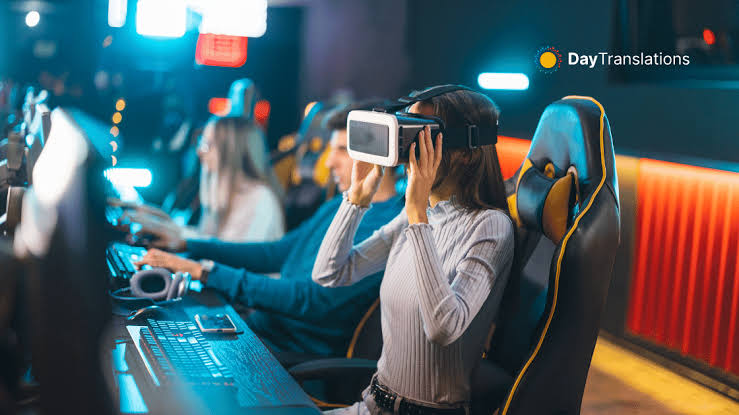
Introduction: Breaking Language Barriers in Gaming
Online games have become global spaces where millions of players from different countries interact in real time. However, one of the biggest challenges in this global environment has always been language barriers. Players speaking different languages often struggle to communicate, coordinate strategies, or build friendships.
Real time translation technology has changed this situation dramatically. By instantly converting spoken or written language into another language during gameplay, it allows players from all over the world to understand each other without delay dewa138 . This innovation is not just a convenience feature; it is transforming online games into truly global communities.
What Real Time Translation Means in Gaming
Real time translation refers to the instant conversion of text or speech from one language to another while communication is happening. In online gaming, this can apply to chat messages, voice communication, subtitles, and even in-game instructions.
For example, a player in Pakistan can speak Urdu, and their message is immediately translated into English, Spanish, or Japanese for teammates in different regions. Similarly, responses from other players are translated back instantly.
This seamless communication allows players to focus on gameplay instead of struggling with language differences.
Enhancing Teamwork and Coordination
One of the most important aspects of online gaming is teamwork. In multiplayer games, especially competitive ones, coordination between players is essential for success. Without a shared language, teams often face misunderstandings that lead to poor performance.
Real time translation solves this issue by ensuring that every player receives the same instructions in their own language. Whether it is planning an attack, defending a position, or sharing resources, communication becomes smooth and accurate.
This improvement in coordination makes global matchmaking more effective. Players from different regions can now compete or cooperate without being limited by language compatibility.
Building Global Gaming Communities
Before real time translation became common, online games often formed isolated communities based on language. Players would group together with others who spoke the same language, limiting cultural exchange.
Now, translation technology allows gamers to interact with people from completely different backgrounds. A single game lobby can include players from Asia, Europe, the Middle East, and the Americas, all communicating effortlessly.
This diversity strengthens gaming communities. Players share strategies, jokes, and experiences across cultures, creating a more inclusive and connected environment. Over time, friendships form that go beyond language differences, showing how gaming can unify people globally.
The Role of Artificial Intelligence in Translation
Modern real time translation systems rely heavily on artificial intelligence and machine learning. These technologies analyze context, slang, and gaming terminology to provide accurate translations.
Unlike traditional translation tools that often struggle with informal language, AI-powered systems understand the fast-paced and casual nature of gaming communication. For example, phrases like “push mid,” “camp here,” or “revive me” are translated in a way that preserves their meaning in gameplay context.
As AI continues to improve, translations become more natural and adaptive, reducing confusion and improving communication quality during intense gameplay moments.
Improving Accessibility for Players Worldwide
Real time translation also plays a major role in making online games more accessible. Not all players are fluent in widely used gaming languages such as English. Without translation tools, many players would feel excluded from global multiplayer experiences.
With instant translation, language is no longer a barrier to entry. Players can join any server, participate in any event, and communicate freely without needing to learn a new language first.
This inclusivity expands the player base and allows game developers to reach audiences in more regions around the world. It also ensures that gaming remains a universal form of entertainment.
Impact on Competitive Gaming and Esports
In competitive gaming and esports, communication speed and accuracy are critical. Real time translation has started to influence international tournaments where teams often consist of players from different countries.
Coaches and teammates can communicate strategies in their native languages while translation systems ensure everyone understands instructions instantly. This reduces errors and improves coordination under pressure.
However, in high-level esports, even slight delays in translation can affect performance. Because of this, developers are continuously working to reduce latency and improve the speed of translation systems to meet professional standards.
Social Interaction and Friendships Across Cultures
Beyond competition, online games are also social platforms where players build friendships. Real time translation enhances these interactions by making conversations natural and effortless.
Players can share personal stories, celebrate victories, or simply chat during gameplay without worrying about language differences. This leads to deeper social connections and a stronger sense of global community.
Many gamers now report forming friendships with people they would never have met otherwise, all thanks to the ability to communicate across languages in real time.
Challenges in Real Time Translation Technology
Despite its advantages, real time translation in gaming still faces challenges. One major issue is accuracy. Gaming language often includes slang, abbreviations, and rapidly changing expressions that are difficult to translate correctly.
Another challenge is latency. Even a small delay in translation can disrupt fast-paced gameplay, especially in competitive environments where every second matters.
There is also the issue of context. A word or phrase may have different meanings depending on the situation, and incorrect interpretation can lead to confusion during gameplay.
Developers are actively working to improve these systems by training AI models on gaming-specific data and optimizing processing speeds.
The Future of Multilingual Gaming Worlds
The future of real time translation in online games looks very promising. As technology advances, translation systems will become more accurate, faster, and more deeply integrated into game engines.
We may see fully multilingual gaming worlds where language differences disappear completely from the player experience. Voice chat, text chat, and even NPC interactions could automatically adapt to each player’s language in real time.
This evolution will further strengthen global gaming communities and make online games more inclusive than ever before.
Conclusion: A Connected Gaming Future
Real time translation is transforming online gaming into a truly global experience. It removes language barriers, improves teamwork, and builds stronger international communities. By allowing players from different cultures to communicate effortlessly, it turns games into shared spaces where cooperation and friendship can flourish.
As this technology continues to evolve, it will play an even greater role in shaping the future of online gaming, ensuring that language is no longer an obstacle but a bridge connecting players around the world.
