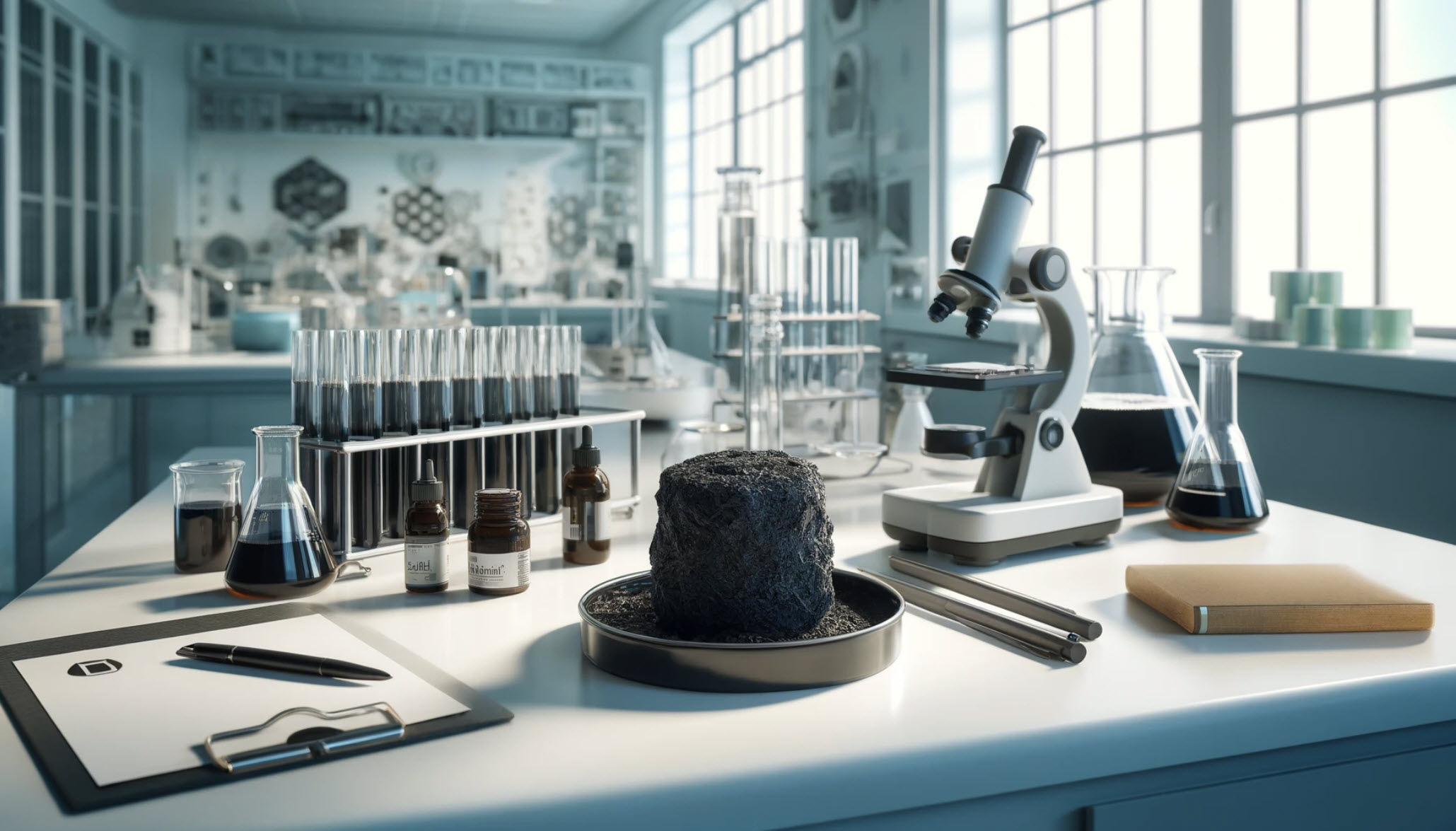
Shilajit, a mineral-rich resin harvested from the Himalayan mountains, is celebrated for its therapeutic and rejuvenating properties. Its complex composition, including fulvic acid, humic acid, trace minerals, and bioactive compounds, makes it a highly valued natural supplement. To ensure quality, authenticity, and safety, laboratory analysis of Shilajit is essential. Modern scientific methods allow researchers and manufacturers to study its chemical composition, detect contaminants, and verify bioactive content. High-quality sources like Shilajit utilize rigorous testing to maintain purity and efficacy. This guide explores the main laboratory analysis methods used to study Shilajit, their applications, and how these methods ensure that consumers receive a safe, effective product.
Chemical Composition Analysis
Understanding the chemical composition of Shilajit is fundamental to verifying its authenticity and potency. Laboratory methods are used to identify and quantify key constituents such as fulvic acid, humic acid, amino acids, and trace minerals. Accurate chemical analysis ensures that the Shilajit meets health standards and maintains its therapeutic value.
Spectroscopic Techniques
Spectroscopic methods are widely used in Shilajit analysis. Techniques such as Ultraviolet-Visible (UV-Vis) spectroscopy, Fourier Transform Infrared (FTIR) spectroscopy, and Nuclear Magnetic Resonance (NMR) provide detailed information about molecular structure and functional groups. UV-Vis spectroscopy helps quantify fulvic acid, while FTIR identifies characteristic bonds and functional groups, confirming the presence of bioactive compounds. NMR provides advanced structural analysis, revealing detailed molecular interactions within the resin.
Chromatographic Methods
Chromatography is essential for separating, identifying, and quantifying individual components of Shilajit. High-Performance Liquid Chromatography (HPLC) and Gas Chromatography (GC) are commonly employed. HPLC is particularly effective in determining fulvic acid content, minerals, and other polar compounds. GC, often coupled with mass spectrometry (GC-MS), is used to analyze volatile components and detect potential contaminants. These techniques allow researchers to understand the complex chemical profile of Shilajit with precision.
Elemental Analysis for Minerals and Trace Elements
Shilajit is rich in essential minerals such as magnesium, potassium, zinc, and iron. Elemental analysis is crucial to verify these contents and detect the presence of heavy metals like lead, mercury, cadmium, and arsenic. Methods such as Inductively Coupled Plasma Mass Spectrometry (ICP-MS) and Atomic Absorption Spectroscopy (AAS) provide highly sensitive detection and quantification of elements at trace levels. Ensuring that heavy metals remain below safe limits is critical for consumer safety.
Thermal Analysis Techniques
Thermal analysis helps determine the stability and decomposition behavior of Shilajit. Techniques such as Thermogravimetric Analysis (TGA) and Differential Scanning Calorimetry (DSC) are employed to study how Shilajit reacts to heat, moisture, and processing. TGA measures weight changes as the sample is heated, revealing information about moisture content, organic matter, and thermal stability. DSC evaluates energy changes during heating, providing insights into the physical and chemical properties of the resin.
Microbiological Testing
Microbial contamination is a potential concern in natural supplements like Shilajit. Laboratory analysis includes testing for bacteria, fungi, and other microorganisms to ensure safety. Standard methods involve culturing samples on selective media and identifying potential pathogens. Modern laboratories also employ rapid molecular techniques, such as polymerase chain reaction (PCR), to detect microbial DNA and confirm the absence of harmful microbes.
Heavy Metal and Contaminant Testing
As a natural mineral-rich substance, Shilajit may contain trace amounts of heavy metals. Laboratory testing for contaminants is critical to ensure consumer safety. ICP-MS, AAS, and X-ray Fluorescence (XRF) are commonly used to detect and quantify heavy metals. These tests also help monitor for environmental contaminants like industrial chemicals or pesticides. Rigorous testing ensures that Shilajit meets international safety standards.
Moisture Content and Water Activity Analysis
Moisture content affects the stability, texture, and shelf life of Shilajit. Laboratory methods such as Karl Fischer titration or loss-on-drying tests measure the water content precisely. Water activity analysis assesses the potential for microbial growth, ensuring that the product remains safe and stable during storage. Maintaining proper moisture levels is essential for preserving bioactive compounds and natural resin qualities.
Spectrometric Identification of Bioactive Compounds
Mass spectrometry (MS) is often combined with chromatographic techniques to identify and quantify bioactive compounds in Shilajit. Liquid Chromatography-Mass Spectrometry (LC-MS) and GC-MS provide detailed molecular information, confirming the presence of key therapeutic substances. These methods allow researchers to assess the concentration of fulvic acid, dibenzo-alpha-pyrones, and other bioactive molecules, ensuring that Shilajit maintains its efficacy.
Quality Control and Standardization
Laboratory analysis plays a vital role in quality control and standardization of Shilajit products. By using a combination of chemical, elemental, thermal, and microbial testing, manufacturers can ensure consistent potency, purity, and safety. Standardization ensures that each batch meets predefined criteria for bioactive content, mineral composition, and contaminant limits, providing consumers with reliable and effective Shilajit.
Integration of Traditional Knowledge with Modern Testing
While laboratory methods provide scientific verification of Shilajit’s properties, traditional knowledge remains valuable in identifying high-quality resin. Experienced harvesters evaluate texture, color, aroma, and source location. Combining this wisdom with modern laboratory testing ensures a comprehensive assessment of authenticity and potency. Consumers benefit from products that adhere to both traditional standards and scientific validation.
Consumer Implications
Laboratory-tested Shilajit provides assurance of safety, purity, and efficacy. Knowledge of the analytical methods used allows consumers to make informed choices, ensuring that the product is free from contaminants, accurately labeled, and rich in bioactive compounds. Awareness of testing practices encourages the selection of reputable brands, which follow strict quality control protocols to maintain high standards.
Conclusion: Ensuring Authenticity and Safety Through Laboratory Analysis
Laboratory analysis methods are essential for studying Shilajit, verifying its chemical composition, detecting contaminants, and ensuring bioactive potency. Techniques such as spectroscopy, chromatography, elemental analysis, thermal testing, microbial evaluation, and mass spectrometry provide comprehensive insights into the resin’s properties. Combined with traditional harvesting knowledge, these methods ensure that consumers receive authentic, safe, and effective Shilajit.
