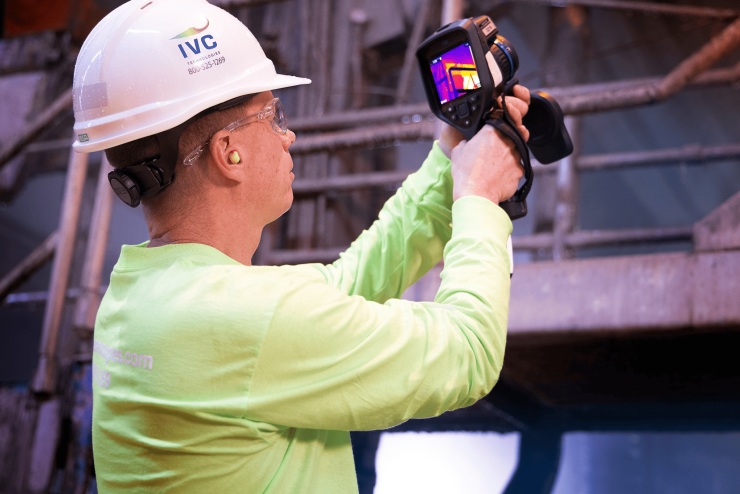
Industrial machinery, electrical systems, and mechanical systems are known to fail when least expected. Such unexpected failures usually result in business downtime and subsequent costly repairs. However, it is vital to foresee such problems preventively to optimize business performance. Infrared (IR) thermography technology is a remotely used diagnosis technique that helps detect any unexpected problems by observing heat radiation through images. Organizations can successfully avert costly repairs by using these techniques. Below are five different ways through which IR thermography technology can prove beneficial.
Detecting Electrical Hotspots Early
Electrical systems frequently malfunction because of overheating, which may result from loose connections, overloaded circuits, and faulty components. Thermal imaging helps maintenance personnel view the heating of electrical panels, transformers, and circuit breakers. This helps organizations plan for repairs when hot spots are detected, which saves them from unexpected breakdowns. Organizations will be able to reduce repair expenditures incurred in case of an emergency because of damaged equipment, in addition to avoiding fires. Additionally, early detection allows maintenance teams to prioritize resources effectively, focusing on high-risk areas first.
Preventing Mechanical Equipment Failures
Mechanical parts like motor, pump, and bearings are prone to heat generation because of friction, misalignment, or lubrication problems. Infrared thermography inspection is capable of indicating irregular temperature variations that are indications of potential problems in machinery. Mechanical problems in equipment or systems can be identified early in their stages with IR thermography inspection. Preventive measures are taken to avoid financial losses that result from unplanned replacement. Regular maintenance of equipment based on infrared inspection enables equipment to operate smoothly without incurring costly machine failures. This approach also improves overall productivity by keeping machines running at optimal performance levels.
Avoiding Equipment Downtime
Undetected problem, unplanned equipment downtime is one of the costliest consequences. Infrared thermography permits teams to monitor critical systems while they are still operational, pinpointing potential failures without disrupting production. Integration of thermal inspections into routine maintenance lets organizations schedule repairs during planned downtime instead of reacting to emergencies. Businesses that invest in dependable infrared inspection services that detect abnormal heat signatures gain a proactive approach to equipment management. Such a strategy minimizes loss of revenue, reduces interruptions in production, and ensures a safe working environment, all while extending machinery lifespan. Minimizing downtime also strengthens customer confidence by ensuring consistent product delivery and service quality.
Improving Building and Process Efficiency
Infrared thermography applications are not restricted to electrical or mechanical aspects. In the case of buildings or industrial applications, thermal imaging assists in the identification of hot spots in the piping or processes. IR thermography applications also help in the identification of areas with little or no insulation in buildings. In fact, infrared thermography applications also help in the early identification of potential problems that may result in an increase in energy consumption and the development of issues such as condensation. Over time, this can contribute to a measurable reduction in operational costs and a smaller environmental footprint.
Enhancing Safety and Compliance
Health, safety, and security breaches can lead to fines or legal troubles. Thermal imaging enables evaluation for potential risks such as hot equipment or a faulty electrical panel, which can cause harm to employees. This enables organizations to identify potential risks not only for the safety of the workers, in terms of injury, but also for adherence to the set safety standards. Early identification of these risks enables organizations to avoid legal troubles as well as potential accidents that could result in financial loss. It also builds a culture of accountability, where safety considerations are incorporated into everyday operational decisions.
IR thermography is a very effective and non-invasive technique for locating problems in electrical systems, mechanical systems, buildings, and industrial processes. In other words, this technique can be used by companies to prevent failures that result in costly repairs and maintenance problems. The best part is that infrared thermography is actually a valuable investment for companies in the sense that it saves money and provides a better means for maintaining productivity. Companies that implement this technology will be able to benefit from a proactive maintenance strategy that can convert potential failures into cost savings. Ultimately, integrating thermal imaging strengthens both operational resilience and the bottom line, making it an indispensable tool for modern industry.
